
Research that changes outcomes.
The HOPE Fund supports a range of research projects within hepatobiliary and upper gastrointestinal surgery at various Melbourne hospitals, turning questions from the operating theatre into evidence that improves lives.
Where your support goes.
Every project below is driven by a clinical need and funded by the generosity of our donors and partners.
From clinical trials and registries to pilot studies and artificial intelligence, each project answers a real question from the operating theatre or the clinic — and every one is made possible by supporters like you.
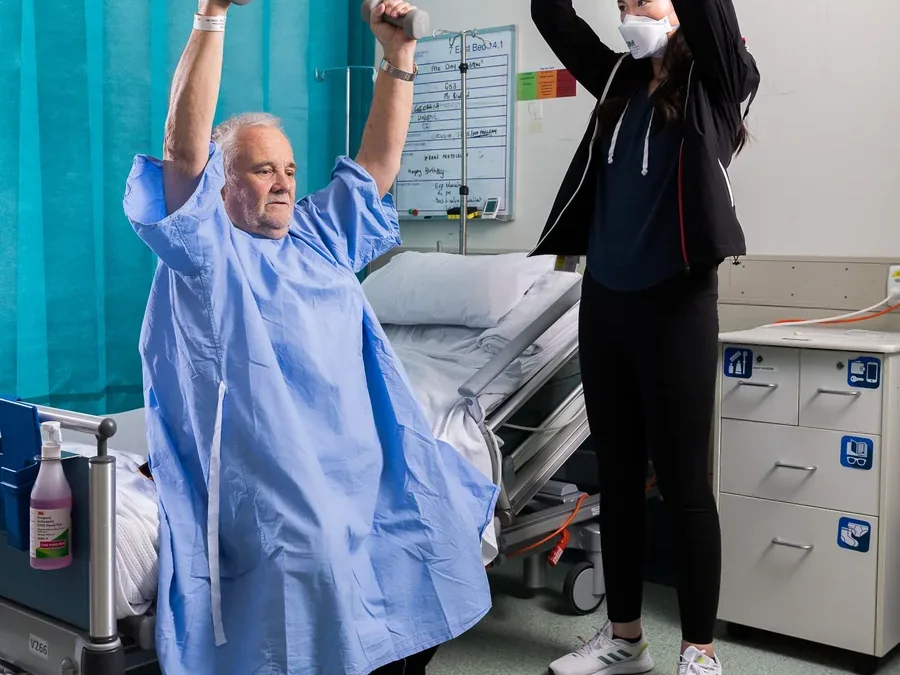
HIIT Cancer project
Randomised controlled trial of High Intensity Interval Training in the immediate post-operative period in patients undergoing major foregut surgery (HIITCancer).
Recent studies over the years show that bed-rest after surgery may not be the best remedy after all. In this study, we investigate the effects of an in-hospital high-intensity interval training (HIIT) program immediately after major foregut cancer surgery. HIIT workouts are suitable for any fitness level, and exercise programs are individually designed for patients during cancer treatment and recovery.
IPMN: Australian Pancreatic Cyst Registry (MAPS Registry)
Intraductal Papillary Mucinous Neoplasms (IPMN) are known precancerous lesions occurring in the pancreas and can change over time to become pancreatic cancer. Pancreatic cancer is a rapidly progressing cancer with an extremely poor prognosis, and most cases are diagnosed at an advanced stage.
This led us to set up a database following patients diagnosed with IPMN, allowing us to identify risk factors that may lead to the development of pancreatic cancer in order to allow early detection, investigation and management. For patients without risk factors who are unlikely to develop pancreatic cancer from IPMNs, minimising the need for surveillance may also reduce anxiety, medical imaging costs and subsequent overtreatment.
Body composition in gastric and oesophageal cancer
Throughout treatment for stomach and oesophageal cancers, patients can undergo a combination of surgery, radiation therapy and chemotherapy, either before or after surgery, or both. Weight loss is common during cancer treatment, and while it was previously thought to be mostly a loss of fat, newer information suggests that people with cancer lose muscle and fatty tissue.
Body composition refers to the amount of muscle, fat, fluid and other tissues in your body. This study aims to determine body composition before, during and after treatment in patients with stomach and oesophageal cancers, characterise the changes that occur over time, and understand the impact on treatment delivery and survival.
Using artificial intelligence to improve surgery
Artificial intelligence (AI) is the computer simulation of intelligent behaviour and critical thinking, and the performance of complex cognitive tasks such as object and word recognition, decision-making and learning. AI and machine learning have growing application in medicine and surgery, with significant potential to improve surgical outcomes.
Body composition assessment in bariatric patients
Bariatric (weight loss) surgery results in significant fat mass loss over a long period of time, with some evidence suggesting this continues for several years after the initial surgery. Fat free mass (lean body mass) also shows an early post-surgery loss which is likely to slow down after six months. Bone mineral density has not been as extensively investigated, but is likely to have a small but significant loss following bariatric surgery, although no adverse health problems have been noted.
This study will contribute to patient care and surgical education, and will promote awareness and understanding for both patients and surgeons about the expected body composition impact of bariatric surgery.
Akynzeo® for post-operative nausea and vomiting after bariatric surgery
Postoperative nausea and vomiting (PONV) is common in the setting of bariatric surgery and can be detrimental to patient recovery. Multimodal antiemetic strategies have been shown to be more effective than monotherapy to target the high incidence of PONV after laparoscopic surgery.
This study evaluates the efficacy of Akynzeo® (netupitant/palonosetron) to prevent PONV in patients with morbid obesity following bariatric surgery, and assesses its cost-effectiveness and safety as a preventative treatment strategy.
Prebiotic and probiotic therapy for preventing surgical infection
Reducing infectious complications after surgery can improve recovery and outcomes. This is the first randomised controlled trial in Australia to investigate the impact of preoperative synbiotics on clinical outcomes in patients undergoing major upper abdominal surgery.
Synbiotics are a combination of probiotics (types of “good” bacteria) and prebiotics (non-digestible fibres the good bacteria use as food). The prescription of synbiotics a few weeks before surgery has been associated with a reduced risk of infectious complications for patients who have undergone general surgery.
Research needs partners.
Your donation funds the trials, registries and pilot studies that move upper GI and HPB care forward.
Registered charity with DGR status. Donations of $2 or more are tax-deductible.